
A typical water heater installation in an HDB flat takes around 1–2 hours when the existing plumbing and electrical points are suitable. The job may take longer if new pipes, wiring, or mounting work is needed. A professional HDB water heater installation also helps ensure the unit suits your bathroom layout and existing connections.
For most HDB flats, an instant water heater is the more practical option because it takes up little bathroom space, heats water only when needed and does not require a bulky storage tank. However, a storage heater may suit larger households that need more hot water or use several hot-water outlets.
Storage vs Instant Water Heaters for HDB Flats
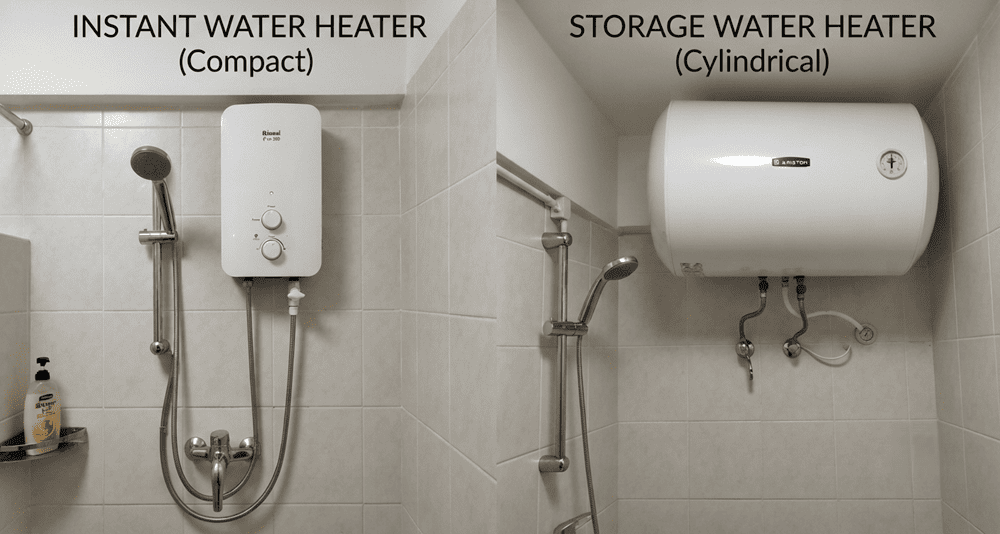
An instant water heater suits most HDB flats where space is limited and hot water is mainly needed for showers, while a storage heater is better for households that need a larger supply of hot water.
When comparing storage vs instant water heater HDB options, think about your household size, bathroom space and daily hot-water use. Instant heaters warm water as you use it, so there is no tank to store heated water. Storage heaters heat water in advance and hold it in a tank until you need it.
| Factor | Storage Water Heater | Instant Water Heater |
| Capacity | Usually 15–50 litres or more, depending on the model | No storage tank; heats water on demand |
| Install Time | Around 2–4 hours, depending on mounting and pipework | Around 1–2 hours for a straightforward installation |
| Suitability | Larger households, higher hot-water use and multiple outlets | Most HDB flats, smaller bathrooms and standard shower use |
| Running Cost | Can cost more to run as water is heated and stored | Often more efficient for light daily use as water heats only when needed |
HDB Rules & Placement Considerations
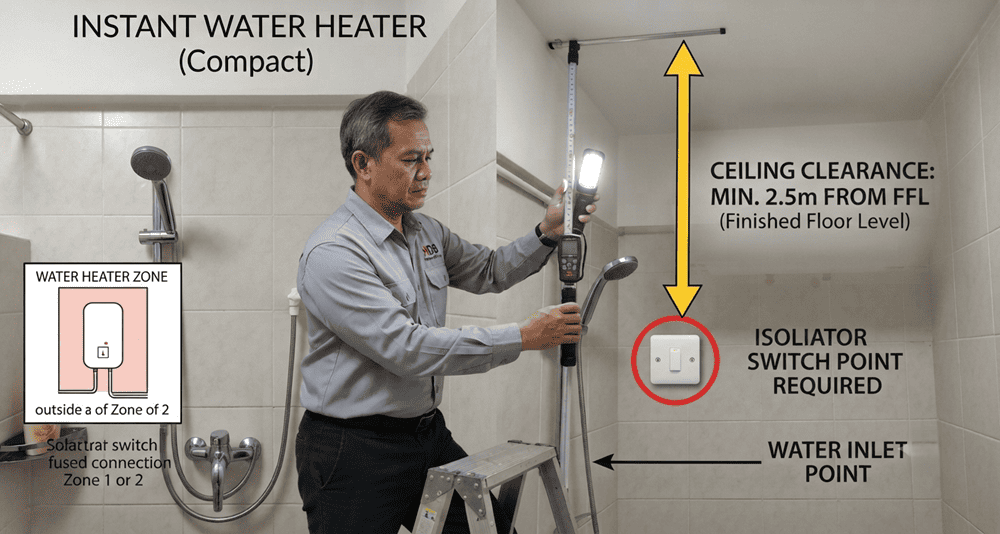
HDB flats have specific renovation and electrical guidelines for water heaters. These are separate from private condo requirements, where an MCST may set additional renovation rules. Understanding the water heater placement rules HDB homeowners need to consider can help you avoid installation issues.
Bathroom Ceiling Clearance
Storage heaters need enough space for the tank, pipes and maintenance access. HDB’s general 2.4-metre minimum false-ceiling height does not apply to bathrooms and toilets, but the heater must still follow HDB requirements and the manufacturer’s installation instructions.
Electrical Loading
Check your flat’s electrical capacity before choosing a heater. For HDB flats with a 30A main switch, an individual instant heater should not exceed 3kW, while a storage heater should not exceed 1.5kW. Different conditions apply to flats with a 40A main switch. Any required electrical installation or circuit changes should be handled by an EMA-licensed electrical worker.
Areas to Avoid
Do not install a private heater in common corridors or shared service areas. The unit should also avoid blocking windows, access panels and other fixtures that need maintenance. For storage heaters above false ceilings, leave enough access for future inspection, servicing and replacement. Following the water heater placement rules HDB flats are subject to can also make future maintenance easier.
Step-by-Step: What Happens During Installation
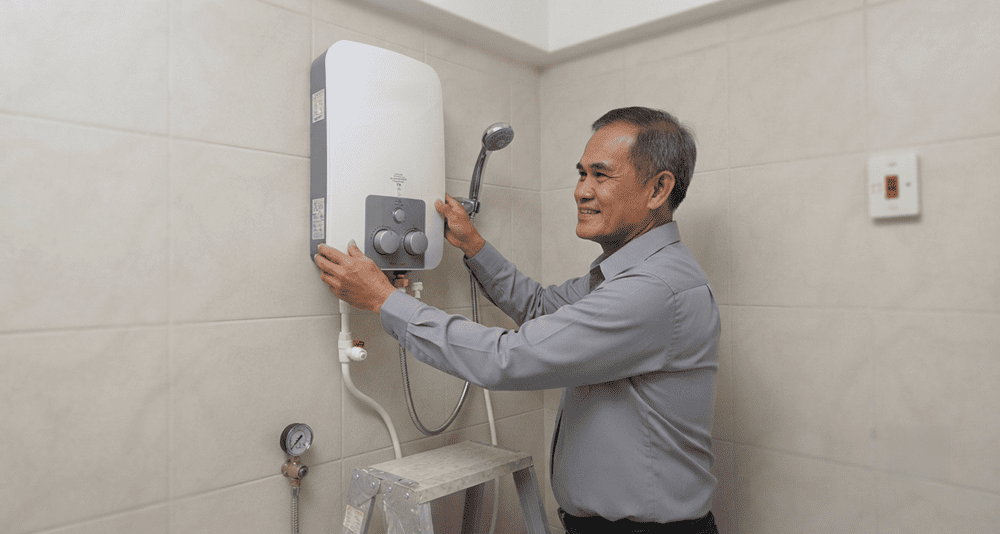
The water heater installation steps are usually straightforward. Here is what you can expect on installation day.
1. Inspect the Existing Setup
The installer checks the heater location, water pipes, mounting space and electrical connection. This confirms whether the new unit can use the existing setup.
2. Turn Off Water and Power
Next, the water and power supplies are switched off. This keeps the area safe while the old heater is disconnected.
3. Remove the Old Heater
For a replacement, the installer disconnects and removes the existing unit. A storage heater may need to be drained before removal.
4. Mount the New Heater
The new unit is fixed securely in place. Storage heaters need strong support because the tank becomes much heavier when filled with water.
5. Connect the Pipes and Power
The installer connects the water pipes, valves and required fittings. If electrical changes are needed, regulated work should be handled by an EMA Licensed Electrical Worker.
6. Test the New Heater
Finally, the water and power are restored. The installer checks the heater for leaks, proper water flow and consistent heating before completing the job.
Signs Your Existing Water Heater Should Be Replaced, Not Just Repaired
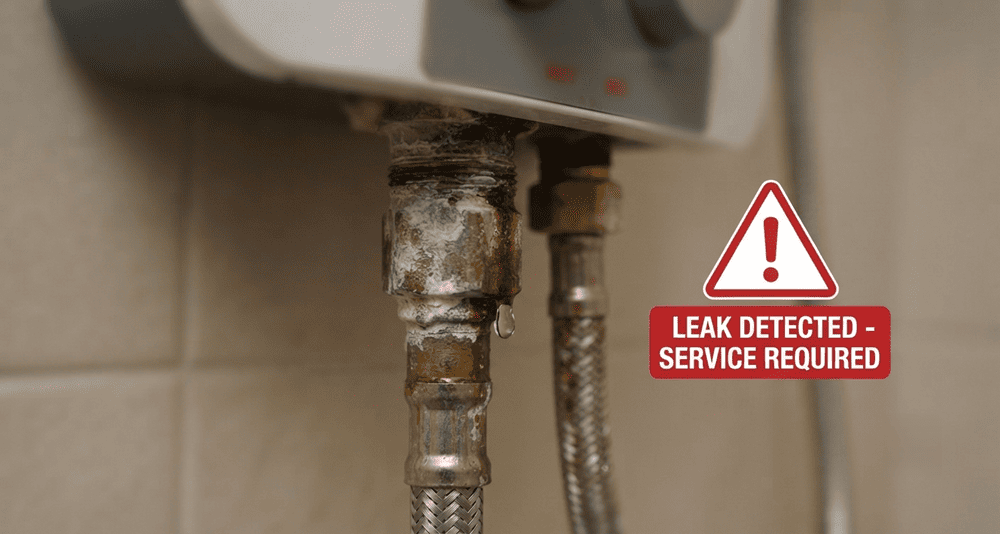
A small fault does not always mean you need a new heater. However, repeated problems can make replacement safer and more cost-effective than another repair.
Consider replacing your water heater if you notice:
- Water leaking from the tank or heater body
- Rust or visible corrosion
- Hot water that keeps cutting out
- Frequent repairs within a short period
- Burning smells or signs of electrical damage
- An older unit with several worn parts
- Repair costs close to the price of a new heater
If you are unsure, read our full guide to water heater replacement signs for a closer look at when repair still makes sense and when it is time for a new unit.
How Much Does It Cost in Singapore?
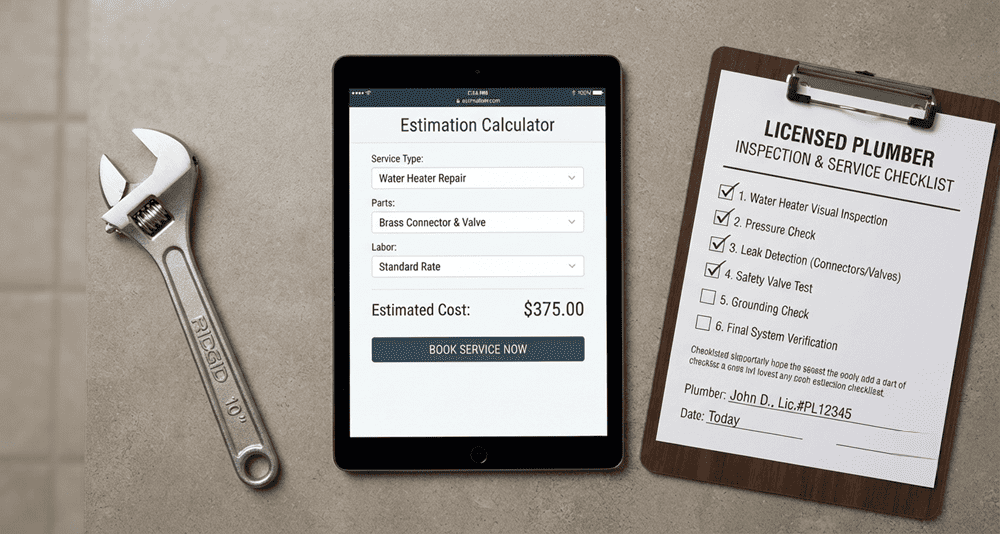
Professional water heater installation in Singapore usually costs around S$200–S$800 for installation work. The total can be higher if the job needs new pipes, wiring or mounting work.
Instant Water Heater Cost
Instant heaters are usually quicker and simpler to fit. Expect to pay around S$250–S$600 for common supply-and-install packages, depending on the model and work required. Costs can increase if you need new wiring, pipe changes or a different mounting point.
Storage Water Heater Cost
A storage heater generally costs more because the tank needs secure mounting and extra pipework. A typical supply-and-install package may cost around S$350–S$800 or more, depending on tank size and installation needs.
For a clearer idea of what affects the final bill, see our detailed cost breakdown before comparing quotes.
Choosing an Installer
Beyond the upfront price, choosing a water heater for HDB flat living also means thinking about long-term running costs, household demand and available space. Comparing these factors can help you avoid paying for a heater that is larger or more powerful than you need.
Check Licensing
Ask who will handle any regulated plumbing or electrical work. Where required, plumbing work should involve a PUB Licensed Plumber, while regulated electrical work should be completed by an EMA Licensed Electrical Worker.
Ask About Workmanship Warranty
Check whether the installer provides a workmanship warranty and what it covers. This is separate from the manufacturer’s warranty on the heater itself.
Check the Fittings
Make sure the installer uses PUB-compliant water fittings suitable for use in Singapore. Quality valves, pipes and connections can also reduce the risk of leaks and early failures.